News digest | September 2026
Contents
Corporate Law Practice
The Government expands business protection and financing programmes
The Cabinet of Ministers of Ukraine has updated state business support mechanisms by expanding programmes for compensating war-risk insurance premiums and concessional lending for rebuilding critical and production infrastructure. The respective amendments to Government Resolutions № 1541 and № 594 were introduced by Cabinet of Ministers of Ukraine Resolutions No. 1157 of 17 September 2026 and No. 1156 of 15 September 2026, respectively. The decisions aim to preserve the economic activity of enterprises, particularly in frontline regions, where the cost of insurance coverage is prohibitive or policies are completely unavailable.
Regarding war-risk insurance, the geographical scope of protection has been expanded: Kyiv and the Kyiv region are now included in high-risk territories. The updated mechanism also ensures comprehensive protection for the fuel sector, extending coverage not only to petrol station buildings but to the entire technological chain – storage tanks, the fuel itself, and specialised transport for its delivery. Furthermore, the Government has expanded the list of eligible property and accommodated various ownership models to ensure greater flexibility of the insurance programmes. The maximum compensation of the insurance premium has been increased from UAH 3 million to UAH 5 million per year, and the list of eligible property now includes agricultural machinery, trucks and trailers.
As for concessional lending, enterprises can now secure affordable financing not only to restore damaged facilities but also to enhance their resilience, for instance, through the construction of underground storage tanks and the deepening of process equipment. Under these loans, the state compensates 5.5 percentage points per annum of the bank’s base rate, provided that the base rate does not exceed 18% per annum. Support covers the construction and restoration of distributed generation facilities, fuel and warehouse logistics, processing industry enterprises (NACE section C), as well as replenishment of working capital of wholesale and retail trade enterprises to restore lost inventories.
The maximum loan amount is up to UAH 1 billion per business entity (including related parties). The minimum limit is UAH 100 million (or UAH 30 million for projects in territories of possible or active hostilities).
Concurrently, the Ministry of Economy is initiating the creation of a special budget fund for recovery and compensation of losses resulting from war risks. In a survey conducted by the Ministry, 63% of respondents supported a coverage level of up to USD 10 million.
Parliament passes the Law on improving the functioning of industrial parks
On 2 September 2026, the Verkhovna Rada of Ukraine passed the Law “On Amendments to Certain Legislative Acts of Ukraine Regarding the Improvement of the Functioning of Industrial Parks” (Law No. 4961-IX; Bill No. 12117). The President of Ukraine signed the Law on 25 September 2026. The Law has partially entered into force, while its principal provisions will enter into force on 26 December 2026. The document aims to create transparent and effective conditions for the development of modern industry, attract investment, create new jobs, and strengthen the country’s economic resilience.
The Law provides for a significant expansion of opportunities for residents and management companies. Notably, the initiator of a park’s creation will be entitled to act concurrently as the management company. The list of permitted activities will also be expanded: participants will be allowed to place energy storage facilities, alternative energy facilities, and generate their own electricity. Furthermore, the Law provides for the regulation of the placement of catering establishments, training centres, and other ancillary infrastructure within the parks. The Law also provides for the introduction of the concept of eco-industrial parks, based on the principles of resource efficiency and industrial symbiosis.
Special attention is given to administrative and financial procedures. The Law provides for streamlining the mechanisms for transferring land ownership, altering a park’s area, as well as the criteria for its inclusion in or exclusion from the Register of Industrial Parks. The Law also abolishes the restriction on the maximum area of industrial parks. The document provides for requirements for maintaining separate accounting of activities and compensating costs for business entities entrusted with public service obligations.
Additionally, it provides management companies whose principal activity is the lease of real property with access to the state concessional lending programme “5-7-9”.
Parliament passes the Law on implementing EU renewable energy legislation
On 2 September 2026, the Verkhovna Rada of Ukraine passed the Law “On Amendments to Certain Legislative Acts of Ukraine Regarding the Implementation of European Union Legislation in the Field of Renewable Energy Sources” (Law No. 4963-IX; Bill No. 14271). The Law entered into force on 1 October 2026. The document is aimed at integrating the Ukrainian market into the European energy space, developing green generation, and aligning Ukrainian legislation with European law requirements in the renewable energy sector.
The law comprehensively updates the regulation of the alternative fuels market by introducing European sustainability and greenhouse gas emission saving criteria for biofuels, bioliquids, and biomass fuels. To confirm product compliance with these requirements, tools such as independent auditing, voluntary certification, and tracking via the European Union database are being implemented. The legislative act also regulates the mechanism for issuing and using biomethane guarantees of origin.
A key innovation is the digitalisation of permitting procedures through the creation of contact points (electronic cabinets) and the introduction of renewables acceleration areas. For projects in such areas, the maximum duration of all permitting procedures cannot exceed 12 months (24 months for offshore wind energy), while outside these boundaries, the limits are 24 and 36 months, respectively. At the same time, the creation of acceleration areas at altitudes above 1,000 metres above sea level is prohibited. Moreover, the document legally establishes the status of renewable energy communities and active consumers, granting them the right to autonomously generate, store, and engage in peer-to-peer trading of electricity.
NEURC approves draft amendments to the Retail Electricity Market Rules
The National Energy and Utilities Regulatory Commission (NEURC) on 15 September 2026 approved draft amendments to the Retail Electricity Market Rules. The document was developed to strengthen consumer rights and further integrate Ukrainian energy markets with European ones. The draft has been published on the NEURC website for comments and proposals.
One of the key provisions of the draft is the right of consumers equipped with smart meters to conclude supply contracts with dynamic pricing. Such a price will fluctuate depending on market variations in the day-ahead and intraday markets. This will allow clients to track cost changes via their personal accounts, adapt their consumption during different periods of the day, and manage expenses more efficiently. Under the draft, transitioning to this format would be entirely voluntary; however, suppliers serving over 200,000 consumers would be required to include a dynamic pricing offer in their portfolios. The draft would also require the electricity supplier to explain the pricing factors, benefits, and risks of the new format to the client.
Furthermore, the draft provides for a simplified supplier switching procedure, which would be free of charge for household and small non-household consumers. Consumers would also gain the right to choose a supplier registered in an EU or Energy Community member state, provided it is admitted to operate on the Ukrainian energy market.
Litigation and Dispute Resolution practice
No court fee is payable for challenging a judgment on an administrative offence – Constitutional Court of Ukraine
The Law of Ukraine “On Court Fees” does not require a court fee to be paid on a claim challenging a ruling that imposes an administrative penalty for an administrative offence.
This conclusion was reached by the Second Senate of the Constitutional Court of Ukraine in its Judgment No. 10-r(II)/2026 of 9 September 2026.
In the applicant’s case, the courts returned his claim seeking to set aside a fine for a traffic offence, and subsequently his appeal, because he had not paid the court fee. In doing so, the courts relied on the position taken by the Grand Chamber of the Supreme Court in its ruling of 18 March 2020 in case No. 543/775/17, according to which such claims are subject to a court fee.
The Constitutional Court of Ukraine noted, however, that the Law of Ukraine “On Court Fees” provides for a court fee in administrative offence cases in only one instance, namely where the court itself issues a ruling imposing a penalty. The Law imposes no obligation to pay a fee for challenging such a ruling. The Supreme Court cannot introduce such an obligation by way of interpretation, since only the legislature may determine the instances in which court fees are charged and the applicable rates.
Accordingly, the Constitutional Court did not uphold the approach established by the Grand Chamber of the Supreme Court in its judgment of 18 March 2020 in case No. 543/775/17, under which such claims were subject to a court fee.
The Constitutional Court stated that, by determining both the obligation to pay a court fee and the applicable rate in such cases, the Grand Chamber had exceeded its powers. At the same time, the Constitutional Court found the provisions applied by the courts, namely paragraph 7 of subclause 1 and subclause 5 of clause 3 of Article 4(2) of the Law, to be consistent with the Constitution of Ukraine, as interpreted to mean that they do not require a court fee to be paid in cases challenging judgments imposing administrative penalties. For persons challenging such judgments, this means that a requirement to pay a court fee on a claim, or on an appeal against a procedural judgment of the court in such a case, has no basis in the Law of Ukraine “On Court Fees”.
The Government approves the procedure for administering employers’ arrears for failure to meet the employment quota for persons with disabilities
By Resolution No. 1124 of 15 September 2026, the Cabinet of Ministers of Ukraine approved the Procedure for Administering Administrative and Economic Sanctions for Failure to Meet the Quota of Jobs for Persons with Disabilities, and Penalties for Late Payment Thereof, Accrued but Unpaid as at 1 January 2026. The Resolution entered into force on 16 September 2026.
The Procedure applies to legal entities and individual entrepreneurs that employed hired staff before 1 January 2026, were required to meet the quota and, as at that date, have unpaid sanctions or penalties. Legal entities funded entirely from the state or local budgets are excluded. The Procedure does not constitute grounds for re-assessing sanctions or penalties or altering their amount, nor does it renew the time limits for bringing proceedings before a court or for submitting a writ of execution for enforcement.
The regional branches of the Social Protection Fund for Persons with Disabilities will keep a record of the arrears of each employer broken down by reporting year. Within 10 working days of first entering the relevant data, they will send the employer a notice setting out the status of its arrears. The notice is for information purposes only: it is not an administrative act, does not give rise to a new monetary obligation and is not subject to administrative appeal.
An employer may request a reconciliation either before or after receiving the notice. The reconciliation takes 10 working days, during which no enforcement action is taken in respect of the disputed amount, unless this would cause the time limit for bringing court proceedings or for submitting a writ of execution for enforcement to expire. Arrears not paid voluntarily will be recovered by the Fund regardless of whether a notice has been sent, including through the courts, in enforcement proceedings and in bankruptcy proceedings.
The Register of Damage opens the final three claim categories for legal entities
Since 10 September 2026, the Register of Damage Caused by the Aggression of the Russian Federation against Ukraine has been accepting claims from legal entities under three further categories. All categories provided for businesses are now open.
Category C3.3 is intended for companies that were forced to evacuate or relocate their operations. Claims under this category may cover the costs of transporting property, resuming operations at a new location and renting accommodation for employees, as well as loss of profit.
Category C3.4 covers other economic losses that do not fall within any other category of the Register, provided that they are a direct consequence of the aggression of the Russian Federation against Ukraine.
Category C4 concerns a company’s expenditure on assistance to its employees and their family members, including evacuation, temporary accommodation and emergency medical care.
Any legal entity registered in Ukraine, including a state-owned enterprise, may submit a claim. The claim is submitted by an authorised representative of the company via the Diia portal. The Register only records the damage caused; decisions on compensation will be taken within the framework of the future international compensation mechanism.
Sale of real property owned or co-owned by a child: guidance from the Ministry of Justice
On 23 September 2026, the Ministry of Justice of Ukraine issued guidance on the procedure for disposing of real property in which a child holds title (or a share in title). In all cases, such a transaction requires the prior consent of the guardianship and custody authority.
For a child under the age of 14, the contract is concluded on the child’s behalf by the parents or other legal representatives. A minor aged between 14 and 18 concludes the contract personally, but only with the notarised consent of both parents or legal representatives. Where the contract on behalf of a child under 14 is concluded by one parent, the consent of the other parent must be notarised. A transaction may proceed without the consent of one parent only in the cases provided for by law, in particular where that parent has been taken captive, has gone missing in special circumstances, is of unknown whereabouts, or has lived apart from the child for at least six consecutive months without taking part in the child’s upbringing and maintenance.
The guardianship and custody authority grants its consent after reviewing the documents, provided that the child’s right to housing is safeguarded. Consent may be refused, in particular, where the parents disagree, where the property is the subject of a court dispute, or where the disposal would prejudice the rights and interests of the child. A refusal by the guardianship and custody authority may be challenged in court.
Tax Law Practice | Tax Alert
New proposals on VAT rules
On September 18, 2026, draft law No. 16037-1 “On Amendments to the Tax Code of Ukraine regarding Simplification of Value Added Tax Administration” was registered with the Verkhovna Rada of Ukraine.
We have previously written about the base draft law No. 16037, which dealt, in particular, with the transition of individual entrepreneurs who are VAT payers to a quarterly reporting period and with changes to certain grounds for conducting unscheduled audits.
By contrast, draft law No. 16037-1 proposes giving a choice as to whether to switch to such a reporting period. It also does not contain the exception that would permit unscheduled documentary audits to be conducted irrespective of the amount of the VAT refund and/or the negative VAT balance.
In addition, it is proposed to abolish the right of taxpayers to be exempt from financial sanctions accrued on the amount of a tax liability determined as a result of a documentary audit during martial law. Instead, it is proposed to apply such sanctions at a rate of 5 per cent, without accrual of late-payment interest.
Simplification of the VAT return: draft order published
On 22 September 2026, the State Tax Service of Ukraine published for public discussion a draft order of the Ministry of Finance of Ukraine “On Amendments to the Form of the Value Added Tax Return, the Form of the Adjusted Calculation of Value Added Tax Liabilities in connection with the Correction of Self-Identified Errors, the Form of the Calculation of Tax Liabilities Accrued by a Recipient of Services Who Is Not Registered as a Value Added Tax Payer, Where Such Services Are Supplied in the Customs Territory of Ukraine by Non-Residents, Including Their Permanent Establishments Not Registered as Taxpayers, and the Procedure for Completing and Submitting Value Added Tax Reporting”.
The main changes it proposes include , in particular:
- the simplifying of the structure of the return by reducing the number of lines and combining interrelated indicators, and to update the form of the adjusted calculation accordingly;
- the updating of Annex 1 to the return by providing for the reporting of information on all adjustments to tax liabilities for the reporting (tax) period;
- the transferring from Annex 5 to Annex 1 the information on adjustment calculations drawn up as a result of recalculating the share of use of goods/services and non-current assets in taxable operations, and to introduce a separate indicator to identify them.
Comments and proposals on the draft order are accepted in writing or electronically within one month from the date of its publication.
Review of case law on procedural violations during tax audits
On September 17, 2026, the Supreme Court published a review of the case law of the Cassation Administrative Court within the Supreme Court on procedural violations in the ordering and conduct of tax audits. The review covers decisions for the period from 2018 to August 2026.
It systematises legal positions on challenging an order to conduct an audit, proper notification of the taxpayer of the audit, and administrative appeals against decisions of the controlling authority, in particular the consideration of objections to an audit report.
The legal positions highlighted in this review include:
- in its judgement dated August 11, 2026 in case No. 320/46652/23, the court stated that the absence of an individual entrepreneur from the tax address does not in itself entitle the tax authority to substitute a desk audit for an ordered on-site audit and to conduct it on its own premises.
Also, single tax payer status does not terminate automatically on the detection of violations of the conditions of the simplified system, since this requires a separate administrative act of the tax authority;
- in its judgement dated May 11, 2026 in case No. 560/15865/24, the court confirmed the established practice that, where objections to an audit report are sent by post, their timeliness is determined precisely by the date on which they were handed to the postal operator.
At the same time, failure to consider objections submitted on time is an independent ground for cancelling the tax assessment notice issued as a result;
- in its judgement dated June 9, 2026 in case No. 160/1167/24, the court held that information about violations obtained from internet resources or internal memoranda of the tax authority does not in itself give rise to the ground for ordering a physical audit provided for by subparagraph 80.2.2 of paragraph 80.2 of Article 80 of the Tax Code of Ukraine.
What is decisive for such a ground is the receipt of information specifically from special entities, namely state authorities or local self-government bodies;
- in its judgement dated March 4, 2026 in case No. 520/13487/24, the court confirmed that failure to comply with the requirements for publishing the schedule of documentary audits, in particular during martial law, constitutes grounds for recognising such an audit as unlawful. That is why courts must first examine the circumstances in which such audits were ordered where the parties are in dispute on the matter.
Criminal Law Practice
Criminal liability established for setting up fraudulent call centres, participating in them and recruiting others into them
On 18 September 2026, the Law of Ukraine “On Amending the Criminal Code of Ukraine to Strengthen Liability for the Creation of Electronic Communications Fraud Organised Groups (Fraudulent Call Centres) and for Recruitment into Them” entered into force. The law amended the Criminal Code of Ukraine by adding Article 255-4, “Creation, management of an electronic communications fraud organised group, and participation therein”.
An electronic communications fraud organised group is defined as an association of three or more persons organised in advance to systematically take possession of somebody else’s property, or obtain property title, by deceit or breach of confidence through the use of electronic communications. The members of such an association act in accordance with an agreed plan and an allocation of functions. The activities of such a group may include, among other things, the collection, storage, processing or use of:
- personal data;
- information constituting a banking secret;
- payment instrument details;
- individual account credentials;
- authentication codes;
- any other information used to commit fraud.
Liability varies based on an individual’s role within the group:
- creation of a group, or management of such a group or of a structural part of it, is punishable by imprisonment for a term of 7 to 12 years with forfeiture of property;
- participation in a group, and also the provision to it of means, services or information, or other assistance by a person who is not a member of the group, are punishable by imprisonment for a term of 5 to 10 years with or without forfeiture of property;
- the intentional recruitment of other persons to participate in a group or to assist it, by offering work, remuneration or services or in any other way, and the dissemination of information for such recruitment, are punishable by imprisonment for a term of 3 to 5 years with or without forfeiture of property;
- if an official commits any of the above acts through abuse of office, it is punishable by imprisonment for 8 to 12 years, with forfeiture of property and deprivation of the right to hold certain positions or engage in certain activities for up to 3 years.
Liability for participation, assistance, or recruitment applies only if the person is aware of the group’s unlawful activities.
The law allows release from criminal liability for participation or assistance if, before being notified of suspicion, the person voluntarily reports the group’s creation or activities to law enforcement and actively helps identify those involved or end the group’s operations. This does not apply to those who created or managed the group or its parts.
Transfer and circulation of payment instruments for the purpose of committing fraud may be criminalised: the draft law has been adopted as a basis
On 15 September 2026, the Verkhovna Rada of Ukraine adopted as a basis (at first reading) the draft law “On Amending the Criminal Code of Ukraine and the Criminal Procedure Code of Ukraine to Protect Citizens and Their Funds from Unlawful Actions Involving Payment Instruments and Bank Accounts”. The draft law would supplement the Criminal Code of Ukraine with Article 200-1 “Transfer, receipt, purchase, storage or other acquisition of payment instruments for the purpose of committing a criminal offence”.
If enacted as currently drafted, Article 200-1 would impose liability for the following actions:
- transfer of a payment instrument or of individual account credentials, or the granting of access to them or to a bank and/or payment account or an electronic wallet, so that other persons can commit fraud or another criminal offence – would be punishable by a fine of 300 to 1,000 tax-free minimum incomes;
- receipt, purchase, storage or other acquisition of another person’s payment instrument or individual account credentials, obtaining access to them or to an account or an electronic wallet, and also the transfer, sale or transportation of them for the same purpose – would be punishable by a fine of 3,000 to 10,000 tax-free minimum incomes, restriction of liberty for a term of 2 to 5 years, or imprisonment for a term of 2 to 6 years;
- the same acts, if committed repeatedly or by an organised group, would be punishable by imprisonment for a term of 5 to 8 years.
The same draft law would also revise Article 200 of the Criminal Code of Ukraine. In addition to the forgery of payment documents and payment instruments, it would cover taking possession of them by deceit or breach of confidence. It would also cover unlawfully obtaining access to a bank or payment account or an electronic wallet.
Lawfulness of mobile phone inspection when the owner voluntarily provides the password: position of the Criminal Cassation Court within the Supreme Court
In case No. 354/1184/23, the Criminal Cassation Court ruled that evidence from a convicted person’s mobile phone was admissible because the individual voluntarily allowed police to inspect the device and provided the access password.
The Court recalled that Article 258 of the Criminal Procedure Code of Ukraine protects the rights of persons who wish to preserve the secrecy of their communication. They also provide safeguards against unauthorised interference in communication by law enforcement agencies. By contrast, no secrecy arises where the subscriber (participant) to the communication does not wish to preserve it and voluntarily discloses it, including to State authorities.
In these cases, there is no interference with communication. The state records information that has been voluntarily disclosed, which then loses its confidential status and becomes public.
Healthcare Industries, Life Sciences and Pharmaceuticals
The Government simplifies pharmacy operation requirements under martial law
The Cabinet of Ministers of Ukraine, by Resolution № 1135 of 17 September 2026, which entered into force on 23 September 2026, amended the Licensing Conditions for the economic activity of manufacturing, wholesale and retail trade, and import of medicinal products (CMU Resolution № 929). The decision was developed to reduce the regulatory burden, overcome staff shortages, and increase the accessibility of medicines for the population under martial law while maintaining basic quality standards for medicines.
For the duration of martial law and for three months after its termination, the pre-licensing inspection of the material and technical base and personnel for retail trade will be conducted solely on the basis of submitted documents without mandatory on-site visits by inspectors, which simplifies the opening of pharmacies in frontline areas. The approach to assortment formation is changing: pharmacies are granted the right to sell any related goods, except for those categories that the Ministry of Health explicitly includes in the prohibited list.
Furthermore, it is permitted to install ATMs, payment terminals, and self-service complexes in customer service areas, as well as to lease or sublease part of the customer service area to other business entities for activities compatible with the Licensing Conditions.
Personnel regulation has undergone significant changes. From now on, pharmacies are allowed to engage employees of other relevant licensees under civil law contracts for compounding medicines and retail sales, and the temporary replacement of an absent authorised person by a qualified employee no longer requires submitting a notification to the licensing authority. Pharmacist interns and employees with relevant education in “Nursing” may dispense medicinal products under the supervision of a pharmacist. In pharmacies and pharmacy branches located in villages or settlements, including in territories of active hostilities, employees with relevant education in “Nursing” may dispense medicinal products independently, while other employees of the licensee may, under the supervision of a pharmacist or pharmacy assistant, dispense only non-prescription medicinal products.
The Ministry of Health establishes a daily reporting procedure for donor blood stocks
The Ministry of Health of Ukraine, by Order № 1317 of 7 September 2026, established a procedure for the daily submission of information on stocks of donor blood and its components. The document determines the procedure for interaction between state and municipal entities of the blood system and the National Transfusion Centre for real-time monitoring and timely replenishment of stocks.
According to the order, state- and municipally owned blood system entities are required to submit information on collection volumes and available stocks of donor blood and its components daily by 10:00. The resources of the blood donation information and communication system have been designated as the primary data transmission channel, and in case of technical failures or lack of access — electronic communication means. The previous Ministry of Health Order № 424 of 7 March 2022 on this matter has been repealed.
The Order also defines the stock indicators to be reported daily. Such stock must include donor blood and its components in volumes sufficient to meet the weekly needs of institutions providing transfusion services, with an additional reserve of 25%. During martial law, as well as in the event of natural disasters, accidents, catastrophes or other emergencies, the additional reserve must amount to at least 50% of the weekly requirement.
The use of medical equipment will now be recorded in the eHealth system
The Ministry of Health has announced that healthcare professionals will begin entering detailed information about the equipment used during examinations, procedures, or surgeries into the patientʼs electronic medical records. These changes will make the treatment history more comprehensive and transparent, helping doctors in various healthcare institutions to better interpret results and make more accurate clinical decisions.
The innovation makes it possible to specify data regarding the performed medical manipulations. For instance, the electronic healthcare system (eHealth) will clearly record the exact CT scanner, MRI machine, or other specialised equipment used during the intervention. This will help the National Health Service of Ukraine confirm that medical care was provided using equipment required under the relevant package of the Medical Guarantee Programme, and in the future — analyse the equipment workload level to plan its rational renewal.
The implementation of equipment accounting is carried out in execution of the Ministry of Health Order № 587of 28 February 2020 regarding the maintenance of the Register of Medical Records, Referral Records, and Prescriptions in the eHealth system. At the first stage, recording the use of equipment will cover the specified list of medical equipment approved by the Ministry of Health Order № 697 of 22 April 2025.

Oleksandr Melnyk
Partner, Head of Corporate Law and M&A practice, Attorney at law
- Contacts
- 31/33 Kniaziv Ostrozkykh St, Zorianyi Business Center, Kyiv, Ukraine, 01010
- o.melnyk@golaw.ua
- +38 044 581 1220
- Recognitions
- Lexology Index: Client Choice 2026
- The Legal 500 2025
- IFLR1000 2025 (International Financial Law Review)
- Legal 500 Green Guide 2024
- 50 Leading Law Firms Ukraine 2026

Viktoriia Bublichenko
Partner, Head of Tax, Restructuring, Claims and Recoveries practice, Attorney at law
- Contacts
- 31/33 Kniaziv Ostrozkykh St, Zorianyi Business Center, Kyiv, Ukraine, 01010
- v.bublichenko@golaw.ua
- +38 044 581 1220
- Recognitions
- ITR World Tax 2026
- Lexology Index: Corporate Tax 2025
- IFLR 1000 2024
- 50 Leading Law Firms Ukraine 2026

Nataliia Matviichuk
Head of Litigation and Dispute Resolution practice, Attorney at law
- Contacts
- 31/33 Kniaziv Ostrozkykh St, Zorianyi Business Center, Kyiv, Ukraine, 01010
- n.matviichuk@golaw.ua
- +38 044 581 1220
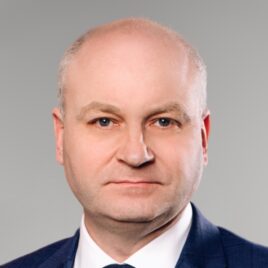
Igor Glushko
Partner, Head of Criminal Law and White Collar Defence practice, Attorney at law
- Contacts
- 31/33 Kniaziv Ostrozkykh St, Zorianyi Business Center, Kyiv, Ukraine, 01010
- i.glushko@golaw.ua
- +38 044 581 1220
- Recognitions
- The Legal 500 EMEA 2025
- 50 Leading Law Firms Ukraine 2026
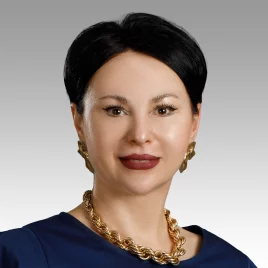
Angelika Moiseeva
Partner, Attorney at law
- Contacts
- 31/33 Kniaziv Ostrozkykh St, Zorianyi Business Center, Kyiv, Ukraine, 01010
- a.moiseeva@golaw.ua
- +380 44 581 1220
- Recognitions
- The Legal 500 EMEA 2025
- Lexology Index: Business Crime Defence 2024
Get in touch
To get a consultation, please fill out the form below or call us right away:
 We respond within 2 hours on business days
31/33 Kniaziv Ostrozkykh st, Kyiv
We respond within 2 hours on business days
31/33 Kniaziv Ostrozkykh st, Kyiv
 All data is protected by attorney-client privilege in accordance with Article 22 of the Law of Ukraine “On the Bar and the Practice of Law.”
Sign up to be aware
New achievements are inspired by information. GO further, don’t miss out GOLAW news and legal alerts
We use cookies to improve performance of our website and your user experience.
Cookies policy
Cookies settings


