Exporting Ukrainian Weapons and Technology: From Authorisation to Shipment Permit
Contents
Until recently, a foreign investor putting money into defence manufacturing in Ukraine had only one customer, the State, and no lawful way of selling the output abroad. That restriction was removed by Cabinet of Ministers Resolution No. 875, which came into force in early July 2026 and opened up controlled exports of military goods and dual-use items.
An enterprise previously tied to a single customer can now serve demand from across the world. That demand is no accident: Ukrainian weapons have been tempered by a real war, and it is precisely this combat validation that makes them sought after abroad. According to Channel 24, F-Drones has supplied the Pentagon with two thousand F10 strike drones under the US Drone Dominance programme, the budget of which is estimated at approximately USD 1 billion.
The opening of an export corridor does not, however, amount to unrestricted trade. A company first acquires the right to export as such, and only then obtains a separate permit for each individual shipment. Buyers may be selected only from a list of friendly States, and a percentage of the contract value is payable for every permit. This article sets out how that route is arranged and what legal risks attach to each of its steps, from the right to export through the transfer of technology to the structuring of the transaction itself.
The export perimeter: what may be sold and where
Before turning to the procedure, it is worth mapping the boundaries within which export is possible at all, since it is these that filter out a substantial share of hypothetical transactions before the first application is ever filed.
The subject matter of export is governed by the Law of Ukraine “On State Control over International Transfers of Military and Dual-Use Goods” No. 549-IV (the “Law No. 549-IV”), which divides such products into two categories. The first comprises purely military goods; the second, dual-use items suitable for both civilian and military applications. The lists for both categories are approved by Cabinet of Ministers resolutions and are updated periodically. The rules governing the transfer of a particular item depend on which of the two it falls into. The special wartime procedure introduced by Resolution No. 875 operates on top of the previously established State control procedures and applies alongside them to the extent that it does not conflict with them. That procedure is itself temporary and operates only for the duration of martial law, whereas the general procedures remain permanent.
The form in which something is transferred also matters, since Law No. 549-IV distinguishes at least three types of subject matter, namely finished products, components and technology, each with its own legal regime and its own permit cost. The distinction should be fixed at the outset, because a component, a finished item and design documentation are not interchangeable objects of export. Technology transfer is dealt with in a separate section below.
The State restricts the destination of shipments even more tightly, since sales may be made only to countries on a list approved quarterly by the Ministry of Foreign Affairs and reviewed periodically, so the range of permitted destinations changes from time to time. Separately, the Ministry of Defence determines and regularly updates a list of critical goods whose export is restricted. Overriding all of this is the unconditional priority of Ukraine’s own Armed Forces: sales abroad are permitted only for so long as they do not prejudice supply to the front.
A value threshold is added to these restrictions: under Resolution No. 875, an export exceeding UAH 15 million requires a foreign economic contract and a separate permit from the State Service of Export Control of Ukraine (the “Export Control Service”), while this rule does not extend to constituent parts and components.
The permitting architecture: authorisation and permit
The permitting structure has two tiers. The first confers the right to export at all; the second requires a separate permit for each transfer. It is this distinction that shapes the manufacturer’s entire subsequent route.
The first tier is the authorisation, a right granted by the Government to a business entity to engage in the export and import of military goods as such. The procedure for granting it is laid down in the Regulation approved by Resolution No. 838. The authorisation confirms that the company has been admitted to the export of such goods in general, and it precedes any shipments.
At the second tier, the Export Control Service issues a permit for each specific international transfer following an examination of the documents. An authorisation without a permit does not confer the right to ship a consignment, and a permit is available only to a party that already holds an authorisation or is exempt from obtaining one.
It is at this tier that Resolution No. 875 introduced a notable simplification for strategic partners. For States with which Ukraine has concluded an international treaty on cooperation in unmanned systems and defence technology, a transfer may take place without clearance by the Interagency Commission on Military-Technical Cooperation and Export Control Policy. This format is known as the “Drone Deal”, and the list of the relevant States is approved quarterly by the Ministry of Foreign Affairs. For all other destinations, interagency clearance remains in place, and the first official permit for the export of finished combat unmanned systems, referred to in the conclusions, was issued precisely on the basis of a decision of that Commission.
No less significant than the narrowing of the range of authorities involved in clearance is the revision of time limits. The Export Control Service considers an application within no more than 30 calendar days and, in order to accelerate interagency processing, a tacit consent rule has been introduced, under which the failure of the competent authority to deliver its opinion within the allotted period is deemed to be consent by default. Secondary sources cite somewhat different periods for individual authorities, ranging from fifteen days for the security and intelligence services to twenty days for the Ministry of Defence in respect of goods and ten in respect of technology, and the specific figures should therefore be verified against the text of the Resolution. The weight of this rule is considerable, since it was precisely the open-ended nature of interagency clearances that for years made permitting procedures unpredictable.
The special legal regime Defence City for defence enterprises stands apart; it was described in detail in my previous article in this series. Its residents require no governmental authorisation at all and proceed directly to obtaining permits for specific shipments.
Finally, the permitting channel is not free of charge, and the rate depends on the subject matter of the transfer. It amounts to 20 per cent of value for finished products and for technology, 30 per cent for certain components, and 20 per cent for the re-export of products manufactured using transferred Ukrainian technology. These funds are directed to the special fund of the State Budget for the development of the defence industry.
Export of technology
Designs, documentation, software, know-how and intellectual property rights are often the most valuable assets a defence manufacturer holds and, at the same time, the easiest to lose. Ukrainian law treats their transfer as strictly as the physical export of weapons. Under Law No. 549-IV, disclosing technology to a foreign national is equated with export, and breach of the established procedure for such a transfer constitutes a criminal offence, to which we return below. The practical conclusion for an investor is unambiguous: licensing technology abroad is possible, but subject to the same permitting rules and to a separate, chargeable permit.
The transfer model built into the procedure approved by Resolution No. 875 is designed so that the technology works for the customer without ceasing to belong to the developer. The transfer is effected without any assignment of intellectual property rights, with control retained over their use and onward movement. This is a fundamental difference from an outright sale: the foreign partner acquires the right to manufacture the products, not the right to dispose of the technology itself.
The model is underpinned by requirements imposed on the foreign counterparty, which the procedure makes a mandatory condition of transfer. The agreement must contain State guarantees of the importing country, under which it undertakes: to manufacture products using the technology received strictly in the quantity and on the terms set out in the contract; to transfer to Ukraine all information, documentation and results of any modification, upgrade or change to the design and software of items created using Ukrainian technology; and to refrain from any onward transfer, re-export or sale without the prior written consent of the Export Control Service. For an investor these provisions count twice over: they not only protect the national interest but also preserve for the original developer control over improvements made abroad.
It is technology transfer that opens up the most promising format for entering foreign markets, namely joint production in a partner State while development remains in Ukraine. A telling example already exists: the drone manufacturer F-Drones is opening a plant in the United States through its representative office there, investing approximately USD 18.4 million in the project. For Defence City residents this route is further accelerated: the regime provides for an expedited procedure for obtaining a permit for the export of military technology, designed precisely for setting up production together with partners abroad.
Structuring the transaction and compliance
A State permit opens up the possibility of a shipment but does not secure it commercially or legally; that task is resolved in the contract itself. Several distinct legal dimensions intersect here, each capable of destroying the value of the transaction if it is not addressed in advance.
The first dimension is the foreign economic contract itself, which is a precondition for a permit for large shipments. It fixes the subject matter, the price, the currency and, of particular importance for defence products, the end-use documentation and assurances. The same State guarantees of the importing country referred to above are converted here from an abstract requirement into specific contractual obligations: production volumes, the prohibition on re-export, and the procedure for transferring improvements. Verification of the foreign counterparty, that is, whether it truly is the declared end user rather than an intermediate link, precedes signature rather than following it.
The second dimension is the governing law and dispute resolution. Defence export is almost always cross-border, and the governing law and the arbitration clause are therefore chosen at the contracting stage, referring any disputes to a neutral arbitral forum.
The third dimension is currency supervision. Export settlements fall within currency regulation; a Defence City resident benefits from a simplified currency regime, whereas other manufacturers are governed by the general currency supervision rules, which should be factored into the payment schedule.
The fourth and least obvious dimension is multi-jurisdictional compliance. A Ukrainian permit does not exhaust the regulatory requirements: a shipment is also subject to the import rules of the destination country and, where the item incorporates components of foreign origin, to the export restrictions of those third States from which the components originate. End-use control continues after shipment. To disregard this dimension is to obtain a shipment that is lawful from Ukraine’s perspective yet breaches the law of another State.
Restrictions, the fiscal side and liability
Each of the mechanisms discussed carries a cost and a risk, and a candid analysis requires that these be set out separately. The constraints of the export regime lie in three dimensions: the fiscal cost of the channel, the grounds on which the right may be lost, and legal liability for breach.
The fiscal side has already been named: the permit fee rates, 20 per cent for finished products and technology and 30 per cent for components, are directed to the special fund of the State Budget for the needs of the defence industry. This arrangement is to be reinforced further: a bill has been submitted to the Parliament of Ukraine under which, from 1 August 2026, all payments for the issue of permitting documents in the field of export control will be credited to the special fund and applied exclusively to defence purposes; the status of its adoption should be verified as at the date of publication. For a project’s financial model the rate is a real deduction from export revenue, and it is built into the calculations in advance.
The second constraint concerns the grounds on which the right to export ceases to exist. A permit for a specific shipment may be withheld if the goods are classified as critical or if the State intends to procure them for its own needs. For a Defence City resident a particular risk is added: breach of obligations under a State defence contract may entail not only refusal of an export permit but also the loss of resident status itself, with the corresponding tax consequences. The right to sell abroad thus remains derivative of the diligent supply of the domestic front.
Breach of the established procedure for international transfers of goods subject to State export control is a criminal offence under Article 333 of the Criminal Code of Ukraine: in the wording cited, it is punishable by a fine of two to five thousand tax-free minimum incomes of citizens, or by restriction of liberty or imprisonment for a term of up to three years, with deprivation of the right to hold certain positions or engage in certain activities.
This article was written by Valentyn Gvozdiy, Founding Partner at GOLAW, Attorney at law, PhD
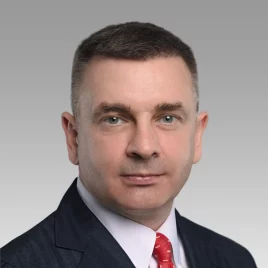
Dr. Valentyn Gvozdiy
Founding Partner at GOLAW, Attorney at Law, PhD
- Contacts
- 31/33 Kniaziv Ostrozkykh St, Zorianyi Business Center, Kyiv, Ukraine, 01010
- v.gvozdiy@golaw.ua
- +38 044 581 1220
- Recognitions
- The Legal 500 EMEA 2026
- 50 Leading Law Firms of Ukraine 2026 (PRAVO.UA)
- Lexology Index: Corporate Tax 2025 (formerly Who’s Who Legal)
- ITR World Tax 2025
- Who’s Who Legal 2019–2022
- The Best Lawyers in Ukraine 2022
- Legal Awards 2021 (Yurydychna Praktyka)
- Lexology Legal Influencer
Get in touch
To get a consultation, please fill out the form below or call us right away:
 We respond within 2 hours on business days
31/33 Kniaziv Ostrozkykh st, Kyiv
We respond within 2 hours on business days
31/33 Kniaziv Ostrozkykh st, Kyiv
 All data is protected by attorney-client privilege in accordance with Article 22 of the Law of Ukraine “On the Bar and the Practice of Law.”
Sign up to be aware
New achievements are inspired by information. GO further, don’t miss out GOLAW news and legal alerts
We use cookies to improve performance of our website and your user experience.
Cookies policy
Cookies settings


