Entrance to the Ukrainian IT Market: what should you consider?
Contents
- What are the most common options for entering the Ukrainian IT market?
- Diia.City and its role in market entry
- What are the tax differences between different market entry options?
- What are the main types of IT companies operate in Ukraine?
- How to protect intellectual property rights in IT?
- Summary of protection mechanisms
- What are the options for engaging developers under Ukrainian law?
The Ukrainian IT industry has demonstrated remarkable resilience and growth, with revenues reaching approximately $6.2 billion in 2024. IT services now account for 37.4% of the country’s total service exports and 11.5% of all exports, underscoring the sector’s strategic importance to Ukraine’s economy.
With over 9,600 registered IT companies and a workforce of more than 300,000 professionals, Ukraine has established itself as a global IT outsourcing hub. Services are exported to 147 countries, led by the United States, the United Kingdom, Malta, Switzerland, Germany, and Israel, where Ukrainian developers are valued for their innovation and high-quality expertise.
The country also maintains a strong talent pipeline, producing over 30,000 IT graduates annually, and boasts a vibrant startup scene with more than 2,600 active ventures that have attracted nearly $1.5 billion in funding. Government initiatives like Diia.City and the Innovation Development Fund further strengthen the legal and tax framework, making Ukraine one of the most attractive IT destinations in Eastern Europe.
What are the most common options for entering the Ukrainian IT market?
Limited liability company (the “LLC”)
The most common way to run a business in Ukraine. An LLC is a separate legal entity, and its participants are only liable up to the amount of their contributions. Registration is quick and straightforward and can be done under power of attorney. An LLC gives complete flexibility for signing contracts, hiring staff, opening bank accounts, and expanding operations.
- Representative office of a foreign company (the “RO”)
Not a separate legal entity but a subdivision through which a foreign parent company operates in Ukraine. Since September 2024, their registration has been handled by state registrars, and disclosure of the parent company’s beneficial ownership structure is required. If the assets of an RO are insufficient, creditors may bring claims directly against the parent company. As a result, ROs are now used less frequently than LLCs.
Diia.City and its role in market entry
Diia.City is a special legal framework designed for Ukrainian tech companies. Only Ukrainian legal entities can become residents. Representative offices of foreign companies are not eligible to join.
Key features of Diia.City:
- tax benefits;
- focus aimed at supporting the digital economy, including software development, cybersecurity, research and development, and online platforms;
- legal stability provides guarantees against unfavourable legislative changes for 25 years; and
- flexible cooperation allows companies to engage staff under either employment contracts or gig contracts, making collaboration more adaptable to business needs
For complete business operations and client work in Ukraine, companies most often set up an LLC, and then consider joining Diia.City to benefit from its advantages.
What are the tax differences between different market entry options?
In Ukraine, IT companies may choose between the standard corporate tax regime and the special legal framework of Diia.City. The key differences relate to how the company itself is taxed and how payroll is taxed. For companies operating outside Diia.City, remuneration paid to employees is generally subject to the standard payroll tax burden, including 18% personal income tax, 5% military levy and 22% single social contribution payable on top of the employee’s salary.
Taxation of individuals engaged by IT companies:
| Gig specialist / Employee | Private Entrepreneur (3 group) | |
| Who pays taxes and single social contribution? | Company | PE |
| Personal income tax rate | 5% | No |
| Military levy | 5% | 1% (of revenue) |
| Amount of single social contribution | Minimum (UAH 1 902.34 in 2026) | Minimum (UAH 1 902.34 in 2026) |
| Restrictions on cooperation | No | No |
| Single tax | No | 3% with VAT 5% without VAT |
| Annual revenue limit | No | UAH 10,091,049.00 |
This reduced payroll burden is one of the key practical advantages of Diia.City. Compared with the standard employment model, where companies must account for 18% personal income tax, 5% military levy and 22% single social contribution on top of salary, Diia.City allows eligible companies to engage employees or gig specialists under a more favourable tax framework. This makes the regime particularly attractive for IT companies that rely on large teams of specialists and need a predictable, scalable employment model.
What are the main types of IT companies operate in Ukraine?
The Ukrainian IT market is generally structured around several common business models. Understanding how each model typically operates in Ukraine is essential for choosing the appropriate legal structure, tax regime, and approach to engaging specialists.
- Separate IT department
A common approach for international groups is to establish a Ukrainian entity as an internal IT development centre. In such a structure, the Ukrainian company typically provides software development or support services exclusively (or primarily) to the parent company or other affiliated entities within the group under intercompany service agreements.
This model allows the group to centralise IT functions in Ukraine, benefit from access to qualified technical talent, and maintain operational control over the development process. It is particularly suitable for companies seeking to build a stable long-term team, ensure confidentiality, and retain intellectual property within the corporate group.
In practice, such entities are often structured as limited liability companies and may also consider Diia.City residency depending on their activities and staffing model.
- Service IT company
Service IT companies are one of the most common forms of IT business in Ukraine. These companies provide software development, IT consulting, quality assurance, and related services to external clients, usually under long-term service agreements or project-based contracts.
This model is characterised by relatively predictable cash flow and the ability to scale operations quickly in response to demand. Ukrainian service companies often work with international customers and operate under export-oriented structures. A key practical focus for such businesses is efficient workforce engagement and contract management, including proper structuring of relationships with specialists.
Depending on the scale of operations and client base, such companies may operate under the standard corporate model or choose to become Diia.City residents.
- Product IT company
Product IT companies develop and commercialise their own software products, mobile applications, or other digital solutions. Unlike service companies, product businesses focus on building intellectual property and scaling the product through licensing, subscriptions, or direct sales.
In Ukraine, product companies typically place significant emphasis on intellectual property structuring, ensuring that all rights to software and related developments are properly assigned to the company. This is particularly important when teams include both employees and independent contractors. Such businesses may also consider Diia.City as a framework supporting flexible engagement models and enhanced legal tools tailored to the digital economy.
This model is often chosen by startups and innovation-driven companies aiming to grow internationally and attract external investment in the long term.
How to protect intellectual property rights in IT?
| Product / asset | Appropriate protection mechanisms | Key features |
| Software code and programs | – Copyright – Software licensing | – Automatically protected upon creation if original – Registration at the Ukrainian National Office for Intellectual Property and Innovation strengthens proof of authorship and date – Licensing agreements determine permitted use, distribution, modification, and territorial or time limits |
| Technical software solutions (algorithms, methods) | Patent protection | – Applicable when the software includes a technical invention – Requires novelty, inventiveness, and industrial applicability – Patent grants exclusive rights for up to 20 years |
| Brand names, logos, identifiers | Trademark protection | – Protects distinctive signs, names, and symbols – Prevents consumer confusion with competitors – Renewable indefinitely if in use |
| Online identity and presence | Domain name protection | – Ensures exclusive use of relevant internet domain – Important for online distribution, platforms, and SaaS services |
| Documentation, design, UI mock-ups | – Copyright – Contractual protection (NDAs, work-for-hire clauses) | – Copyright applies automatically – Contractual terms further ensure ownership and confidentiality |
Summary of protection mechanisms
Copyright
Software code and related materials are protected by copyright automatically upon creation, provided they are original. Although registration is not mandatory, registration with the Ukrainian National Office for Intellectual Property and Innovations provides additional evidentiary value in case of disputes.
Licensing
Licensing enables the IP owner to grant third parties the right to use the software under defined conditions. Licence agreements may be exclusive or non-exclusive and typically regulate the scope of permitted use, distribution, and modification.
Patent protection
Patent protection may be available where software includes a technical solution meeting patentability criteria. Purely abstract algorithms without a technical effect are generally not eligible for patent protection.
Trademark protection
Trademark registration protects elements that distinguish a product or service in the marketplace, such as names, logos, or slogans. Ukrainian trademark protection is renewable indefinitely as long as use continues.
Domain name protection
Securing relevant domain names protects the online identity of software products or platforms, preventing others from registering and using the same domain.
Contractual measures
Confidentiality agreements (NDAs), clear work-for-hire clauses, and comprehensive IP assignment clauses in contracts with employees and contractors reinforce legal control over IP.
What are the options for engaging developers under Ukrainian law?
Ukrainian IT companies can structure cooperation with developers using four key models: employment contracts, civil law agreements, gig contracts, and contracts with private entrepreneurs. These models vary in legal nature, flexibility, and suitability depending on whether the company is a Diia.City resident, and whether the developer is local or foreign.
| Model | Definition | Advantages | Disadvantages |
| Employment contract | Formal employment governed by the Labour Code of Ukraine, with full application of labour rules and statutory guarantees | High legal certainty and clear employer control framework Full social guarantees for the individual Suitable for long-term, integrated roles | Lower flexibility for working time and management arrangements compared to contractual models More formal procedures for termination For foreign developers, requires a valid work permit where applicable |
| Contracting with a private entrepreneur (PE) | Engagement of an individual registered as a private entrepreneur under a civil law services contract, with the PE acting as an independent business entity | Operational flexibility and simpler day-to-day administration Scalable model commonly used in the Ukrainian IT market The PE manages their own tax compliance as a general rule | Reclassification risk if the relationship mirrors employment in substance For Diia.City residents, use of PEs is permitted but may be subject to statutory limitations under the regime Typically not suitable for foreign developers unless they legally reside in Ukraine and can register accordingly |
| Civil law agreement | A civil law contract for services or a defined deliverable, regulated by civil law rather than labour law | Flexible, project-based engagement without integrating the contractor into staff Easier termination and change management compared to employment Suitable for short-term tasks and limited-scope assignments | Reclassification risk if there is de facto subordination or regular work under employer-like control Requires careful drafting of scope, acceptance, and IP terms For Diia.City residents, this model is typically less attractive than gig contracts |
| Gig contract (Diia.City only) | A special contractual, available exclusively to Diia City residents, under which a gig specialist performs work or provides services outside the framework of labour law, while being granted a defined set of statutory social guarantees | Flexible cooperation framework with clearer regulation than standard civil contracts Includes certain protections such as sick leave and maternity-related guarantees Suitable for both Ukrainian and foreign specialists, with simplified engagement rules for foreigners compared to employment contracts | Available only to Diia.City residents Cannot be used with private entrepreneurs or legal entities Automatically terminates if Diia.City residency is lost |
In conclusion, Ukraine offers a well-developed IT ecosystem supported by a strong talent pool, an export-oriented market structure, and a legal framework that allows businesses to choose between standard corporate models and the special Diia City regime. Entering the Ukrainian IT market requires careful selection of the appropriate legal form, engagement model for specialists, and a clear approach to IP ownership and protection. When structured properly, Ukrainian operations can provide both operational flexibility and a stable platform for international growth.
Authors:
Oleksandr Melnyk, Partner at GOLAW, Head of Corporate Law and M&A practice, Attorney at law
Vladyslava Zaichko, Junior Associate at Corporate Law and M&A practice at GOLAW
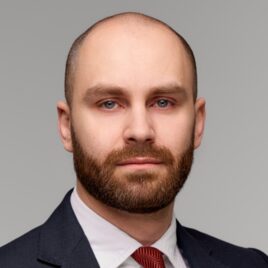
Oleksandr Melnyk
Partner, Head of Corporate Law and M&A practice, Attorney at law
- Contacts
- 31/33 Kniaziv Ostrozkykh St, Zorianyi Business Center, Kyiv, Ukraine, 01010
- o.melnyk@golaw.ua
- +38 044 581 1220
- Recognitions
- Lexology Index: Client Choice 2026
- The Legal 500 2025
- IFLR1000 2025 (International Financial Law Review)
- Legal 500 Green Guide 2024
- 50 Leading Law Firms Ukraine 2026
Get in touch
To get a consultation, please fill out the form below or call us right away:
 We respond within 2 hours on business days
31/33 Kniaziv Ostrozkykh st, Kyiv
We respond within 2 hours on business days
31/33 Kniaziv Ostrozkykh st, Kyiv
 All data is protected by attorney-client privilege in accordance with Article 22 of the Law of Ukraine “On the Bar and the Practice of Law.”

Sign up to be aware
New achievements are inspired by information. GO further, don’t miss out GOLAW news and legal alerts
We use cookies to improve performance of our website and your user experience.
Cookies policy
Cookies settings


