News digest | November 2025
Corporate Law Practice
A draft law on implementing EU rules in the field of renewable energy has been approved
Ukraine is taking another step towards harmonising its energy legislation with the law of the European Union. The Cabinet of Ministers of Ukraine has approved a draft law that updates the legal rules in the renewable energy sector and ensures the adaptation of Ukrainian regulations to European standards.
The document introduces European approaches to defining terminology in the renewable energy sector, updates the methodology for calculating the share of “green” energy in the national energy balance, and sets the procedure for forming the national renewable energy target. A separate block of changes concerns the creation and operation of renewable energy communities – a new participant in the energy market that should receive legal conditions for developing local projects.
The draft law also provides for the introduction of European principles for permitting procedures for renewable energy projects: simplification, shorter deadlines, and the establishment of special zones for faster deployment of green generation facilities, energy storage systems, and grid infrastructure.
It also includes mechanisms for statistical transfers between Ukraine and EU member states, as well as the possibility of implementing joint projects and support schemes for renewable energy.
The adopted rules are intended to strengthen Ukraine’s integration into the European energy area and create more predictable conditions for investors in the renewable energy sector.
The Cabinet of Ministers of Ukraine has approved a biomethane production development programme until 2035
On 27 November 2025, the Government published a draft resolution “On approving the Programme for the development of biomethane production for the period until 2035”.
The main goal is to ensure the sustainable development of the biomethane sector as part of the country’s energy and environmental transformation, to strengthen energy independence, and to reduce greenhouse gas emissions in line with international commitments and cooperation plans with the EU.
The Programme provides for:
- transforming agricultural and household waste (crop residues, manure, etc.) into biomethane;
- gradually increasing production: from current volumes to more than 1 billion cubic metres per year by 2030 and to about 2.1 billion cubic metres per year by 2035; and
- modernising existing biogas plants, constructing new facilities, launching biomethane certification systems, simplifying the regulatory framework, and integrating into European energy markets.
Implementation of the programme should reduce dependence on imported natural gas, give Ukraine the possibility to export biomethane, and stimulate the development of the agricultural sector through waste utilisation.
The NSSMC has approved new requirements for ownership structure and business reputation of capital market participants
On 14 November 2025, the NSSMC approved a new Regulation that establishes updated rules on ownership structure, disclosure of owners, and checks of business reputation for legal entities and individuals who wish to obtain or already hold a licence, or who plan to acquire or increase significant participation in professional participants of the capital market or organised commodity markets.
The Regulation introduces new rules that cover the following aspects:
- requirements for forming and ensuring transparency of ownership structure, as well as criteria for assessing the business reputation of companies applying for a licence, already licensed entities, and persons – both legal and natural – who hold significant participation or intend to obtain or increase it;
- the procedure and conditions under which the NSSMC approves the acquisition or expansion of significant participation in a professional market participant, including procedural requirements for applicants; and
- clarification regarding the application of licensing conditions: they apply only to the extent that they are consistent with this Regulation and do not contradict it.
Legal entities already operating as professional market participants are given one year from the date of entry into force (from 1 February 2026) to bring their ownership structure into compliance with the new requirements.
The purpose of these changes is to increase the transparency of Ukraine’s capital markets, reduce the risks of fictitious ownership or questionable reputation, and strengthen investor confidence and the stability of the financial system.
A new system of economic activity classifications will come into force in Ukraine on 1 January 2026
Preparation has begun for the transition to the new NACE 2.1-UA classifier of economic activities, which will replace the current KVED-2010.
This step aims to align Ukrainian statistical reporting with European standards, improve the accuracy of accounting, and update the classification to reflect the modern economy.
A transition period is provided for businesses throughout 2026 – during this time, companies and individual entrepreneurs can review the correspondence between old and new codes and update their registration data if the old KVED has several new codes or has no direct equivalent.
For many companies, the changes will occur automatically if the old code has a clear equivalent in the new classification.
If a company’s activity is reclassified – meaning the old code is divided into several new ones or the grouping has changed – it will be necessary to update the registry manually.
This reform is part of Ukraine’s European integration efforts and is intended to simplify cooperation with foreign partners, facilitate statistical reporting, and increase the transparency of business activity.
Businesses are allowed to form their own air defence groups
On 19 November 2025, the Cabinet of Ministers of Ukraine approved an initiative of the Ministry of Defence of Ukraine and adopted a procedure under which enterprises, regardless of ownership type, may create their own air defence groups.
This initiative provides that such private air defence groups will work together with state defence forces – under the control of the military command.
Critical infrastructure enterprises – in the energy, communications, transport sectors, and others – as well as other companies that have the necessary resources and can ensure safety, are allowed to take part in the project.
The purpose of the decision is to strengthen the protection system of strategically important facilities, enhance the country’s defence capability, and provide an additional level of protection amid increasing threats.
The Cabinet of Ministers of Ukraine proposes a single permit for residence and work for foreigners in Ukraine
The Government has submitted to Parliament Draft Law No. 14211, which proposes to simplify procedures for foreigners and stateless persons: instead of separate permits for residence and employment, it plans to introduce a single permit that grants the right to temporarily live and work in Ukraine.
The draft law also provides for the creation of a state online employment portal for foreigners, where employers will post vacancies and foreigners will be able to apply for the permit remotely.
Under the new rules, once someone obtains the single permit, they will have the right to enter Ukraine, obtain a visa, and after arrival – submit documents to receive a temporary residence permit.
It is expected that these changes will significantly simplify the process of employing foreigners, reduce bureaucracy, and create more convenient conditions for employers and potential foreign workers.
Tax Law Practice | Tax Alert
Introduction of electronic traceability of tobacco raw materials is planned
On November 25, 2025, a draft law “On Amendments to the Tax Code of Ukraine and Certain Other Legislative Acts of Ukraine Regarding Improving the Effectiveness of Control over the Production and Circulation of Tobacco Raw Materials” was registered with the Verkhovna Rada of Ukraine.
In particular, the draft law provides for:
- expanding the functionality of the eExcise electronic system (“System”) to tobacco raw materials regarding the formation of electronic excise tax stamps for packaging units and tracking the movement of tobacco raw materials;
- introducing mandatory marking of tobacco raw materials with electronic excise tax stamps;
- expanding the scope of economic operators in the tobacco raw materials market (entities involved in import, storage, transportation of tobacco raw materials, as well as the production of raw materials and tobacco products using them);
- creating a Unified Register of Tobacco Raw Material Producers (“Register”);
- tightening requirements for entities engaged in tobacco cultivation and primary processing;
- introducing uniform accounting rules for all stages of production, movement, storage, and use of tobacco raw materials (in kilograms at actual moisture and adjusted to 18% moisture);
- implementing a remote monitoring system for the movement of tobacco raw materials;
- prioritising the use of Ukrainian-origin tobacco raw materials and distinguishing between commercial and household cultivation;
- improving the tax control and liability mechanism (including use of the Register and System data for desk audits, verification of production volumes, and liability for violations related to marking, accounting, storage, transportation, and use of tobacco raw materials).
Changes to the procedures for mutual agreement and prior agreement on pricing in controlled transactions have been proposed
On November 20, 2025, the Ministry of Finance of Ukraine published a draft law “On Amendments to the Tax Code of Ukraine Regarding the Improvement of the Mutual Agreement Procedure and the Advance Pricing Agreement Procedure in Controlled Transactions”.
The draft law proposes the following changes to the mutual agreement procedure:
- structuring the steps of the State Tax Service (STS) during the procedure and clarifying taxpayer rights (including the right to withdraw from agreed settlements);
- updating the grounds for refusing case consideration (removing the pending appeal condition);
- defining possible outcomes of the agreement;
- making recognised agreements binding for the taxpayer;
- detailing the interaction of the mutual agreement procedure with judicial appeals.
For the advance pricing agreement (APA) procedure, the draft law provides for:
- eliminating the option of a unilateral APA between the taxpayer and STS;
- enabling bilateral and multilateral APAs based on positions agreed with foreign tax authorities;
- introducing the concept of “critical assumptions” that must be agreed by STS, the taxpayer, and foreign authorities;
- regulating the review process of APA implementation reports;
- granting STS the right to interview authorised representatives or employees of the taxpayer;
- defining conditions for unscheduled audits in case of agreement termination, invalidity, or non-compliance;
- setting timelines for APA applications, particularly for large taxpayers;
- allowing APA terms to apply retroactively to previous tax periods if agreed by all parties.
Ratification of the Agreement between Ukraine and Slovakia on technical and financial cooperation is planned
On November 21, 2025, a draft law “On the ratification of the Agreement between the Cabinet of Ministers of Ukraine and the Government of the Slovak Republic on technical and financial cooperation” was registered in the Verkhovna Rada of Ukraine.
The Agreement aims to support and facilitate the implementation of programmes and projects in Ukraine financed fully or partially by Slovakia.
In particular, the Agreement provides that:
- all imports of goods into Ukraine and supplies within Ukraine under relevant international agreements will be exempt from taxes, duties, fees, and other charges;
- goods necessary for programme/project implementation may be imported and exported without payment of customs duties, taxes, or similar charges;
- if these goods are alienated within Ukraine, they are subject to taxation unless transferred to persons who are also entitled to exemptions.
Litigation Practice
Law signed allowing the reservation of men who are not registered for military service or are wanted by Territorial Recruitment Centres
On 31 October, the President of Ukraine signed the Law of Ukraine “On Amendments to Certain Laws of Ukraine Concerning the Organisation of Labour Relations Under Martial Law” (draft law No. 13335), which introduces new approaches to reserving certain employees liable for military service. The law enters into force on 4 December 2025.
The law permits the reservation of employees liable for military service who:
- are not registered for military service;
- lack or have improperly issued military registration documents;
- have not updated personal data with Territorial Recruitment and Social Support Centres (TRSSCs);
- are wanted for violations of military registration rules, defence legislation, mobilisation preparation, or mobilisation procedures.
Initially, the draft law envisioned applying these provisions to all critically important enterprises. However, the final version limits applicability to employees at enterprises critical for:
- supporting the Armed Forces of Ukraine and other military formations;
- maintaining economic functions and essential services during special periods, specifically within the defence-industrial complex.
Thus, the new rules on reservation apply only to enterprises that meet these legally defined criteria of strategic importance.
Ten-day period for challenging actions of the state enforcement officer is calculated in calendar days – Supreme Court (CCS)
The Supreme Court clarified that the ten-day period for challenging decisions, actions, or inaction of a state enforcement officer is to be calculated in calendar days under the Civil Procedure Code of Ukraine (CPC), not in working days as stated in the Law of Ukraine “On Enforcement Proceedings.”
In case No. 497/2150/24, the claimant missed the ten-day deadline defined in Article 449 of the CPC and did not file a motion to renew the term or prove valid reasons for the delay. As a result, both the appellate and cassation courts left the complaint without consideration.
The Civil Cassation Court also emphasized that provisions of the CPC take precedence over general norms of the Law “On Enforcement Proceedings,” confirming that procedural time limits must be measured in calendar days.
Procedure for compensation of business losses introduced: when will the new mechanism take effect?
On 29 November 2025, the Cabinet of Ministers adopted Resolution No. 1541, introducing:
- the Procedure for partial compensation of the value of property damaged or destroyed due to Russian armed aggression;
- the Procedure for partial reimbursement of insurance premiums under war risk insurance contracts.
Although the resolution is already in force, it becomes applicable starting 1 January 2026, when businesses can begin submitting applications.
Key provisions include:
- Eligibility: only for entities not in bankruptcy, with no tax debt, and not subject to sanctions.
- Compensation limits: up to UAH 10 million for damaged/destroyed property; up to UAH 1 million/year for insurance premiums.
- Participation is voluntary and involves contributions: 0.5% of estimated loss for property compensation; UAH 5,000 per insurance contract.
- Loss assessment is conducted by certified appraisers.
- Application = agreement to assign the right to claim damages from the Russian Federation to the State.
To apply, businesses must:
- Register damaged property in the State Register of Damaged and Destroyed Property;
- Submit individual applications for each object to the Export Credit Agency JSC;
- Submit insurance compensation applications to both the insurer and the Agency.
Review of applications may take up to 30 calendar days, with an option for extension.
Amendments to the procedure for state registration of property rights to take effect on 1 January 2026
Government Resolution No. 1534 (dated 26 November 2025) amends procedures for:
- State registration of rights to immovable property and their encumbrances;
- Handling complaints related to registration actions or inactions.
These changes aim to align sub-legislation with:
- The Law “On Administrative Procedure”;
- The anti-raiding legislation adopted earlier.
Notable amendments include:
- Allowing registrars to leave applications without movement under legal grounds;
- Enabling complaints against automated actions and inaction by territorial justice authorities;
- Establishing complaint review commissions (as per Resolution No. 420/2023);
- Allowing involvement of complainants and officials in the process, under procedural timeframes;
- Clarifying post-court procedure: if a court cancels a Ministry of Justice decision, no re-review is needed unless otherwise ruled;
- If registry entries resulted from a reversed decision, the Ministry must reverse or amend those entries accordingly.
Leaving a claim without consideration does not suspend or interrupt the time limit for applying to court – Grand Chamber of the Supreme Court
In its 2 October 2025 decision (case No. 990/376/24), the Grand Chamber of the Supreme Court confirmed:
Leaving a claim without consideration does not interrupt or suspend the statutory six-month limit (per Article 122, CAPU) for applying to an administrative court.
A repeated claim may only be filed within the original time limit unless there are compelling, documented reasons for delay.
The court may reassess the timeliness of the claim even after proceedings are initiated if it finds the earlier conclusion premature. In such cases, the court has the right to again leave the claim without consideration under Article 123(4) CAPU.
Let me know if you’d like this content in document format or need any visual summary (e.g., slide or chart).

Oleksandr Melnyk
Partner, Head of Corporate Law and M&A practice, Attorney at law
- Contacts
- 31/33 Kniaziv Ostrozkykh St, Zorianyi Business Center, Kyiv, Ukraine, 01010
- o.melnyk@golaw.ua
- +38 044 581 1220
- Recognitions
- Lexology Index: Client Choice 2026
- The Legal 500 2025
- IFLR1000 2025 (International Financial Law Review)
- Legal 500 Green Guide 2024
- TOP-50 Law Firms of Ukraine 2024

Kateryna Manoylenko
Partner, Head of Litigation and Dispute Resolution practice, Attorney at law
- Contacts
- 31/33 Kniaziv Ostrozkykh St, Zorianyi Business Center, Kyiv, Ukraine, 01010
- k.manoylenko@golaw.ua
- +380 44 581 1220
- Recognitions
- Lexology Index: Employment & Labor 2025
- The Legal 500 EMEA 2025

Kateryna Tsvetkova
Partner, Litigation and Dispute Resolution practice, Attorney at law
- Contacts
- 31/33 Kniaziv Ostrozkykh St, Zorianyi Business Center, Kyiv, Ukraine, 01010
- k.tsvetkova@golaw.ua
- +38 044 581 1220
- Recognitions
- Lexology Index: Client Choice 2026
- Lexology Index: Employment & Labor 2025
- The Legal 500 EMEA 2025
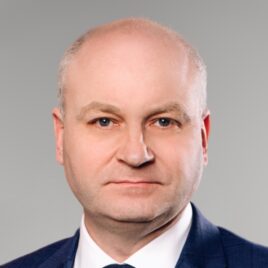
Igor Glushko
Partner, Head of Criminal Law and White Collar Defence practice, Attorney at law
- Contacts
- 31/33 Kniaziv Ostrozkykh St, Zorianyi Business Center, Kyiv, Ukraine, 01010
- i.glushko@golaw.ua
- +38 044 581 1220
- Recognitions
- The Legal 500 EMEA 2025

Angelika Moiseeva
Partner, Attorney at law
- Contacts
- 31/33 Kniaziv Ostrozkykh St, Zorianyi Business Center, Kyiv, Ukraine, 01010
- a.moiseeva@golaw.ua
- +380 44 581 1220
- Recognitions
- The Legal 500 EMEA 2025
- Lexology Index: Business Crime Defence 2024

Kristina Kolchynska
Counsel, Attorney at Law
- Contacts
- 31/33 Kniaziv Ostrozkykh St, Zorianyi Business Center, Kyiv, Ukraine, 01010
- k.kolchynska@golaw.ua
- +38 044 581 1220

Viktoriia Bublichenko
Partner, Head of Tax, Restructuring, Claims and Recoveries practice, Attorney at law
- Contacts
- 31/33 Kniaziv Ostrozkykh St, Zorianyi Business Center, Kyiv, Ukraine, 01010
- v.bublichenko@golaw.ua
- +38 044 581 1220
- Recognitions
- ITR World Tax 2026
- Lexology Index: Corporate Tax 2025
- IFLR 1000 2024
Get in touch
To get a consultation, please fill out the form below or call us right away:Related insights
04 December 2025 Legal news
Benchmark Litigation Europe 2025 recognizes GOLAW’s level of litigation expertis...

02 December 2025 Energy Alert Digest
Partners of GOLAW recognized by clients as among the world’s leading speci...

24 November 2025 Legal news
GOLAW ranked among the TOP-100 law firms in the world according to GRR 100
Sign up to be aware
New achievements are inspired by information. GO further, don’t miss out GOLAW news and legal alerts
Our expertise
- Energy and Natural Resources
- Antitrust and Competition
- Banking and Finance
- Compliance, Corporate Governance and Risk Management
- Corporate and M&A
- Criminal and White Collar Defence
- Defense in Anti-corruption procedures and regulations
- Labor and Employment
- Natural Resources and Environment
- Government Relations (GR)
- Insolvency and Corporate Recovery
- Intellectual property
- International trade
- Legal support of business and private Сlients in Germany
- Litigation and dispute resolution
- Private clients
- Real Estate and Construction
- Restructuring, Claims and Recoveries
- Martial Law
- Tax and Customs
- Agribusiness
- Aviation
- Chemical industry
- Engineering, Construction and Building Materials
- Environment and Natural Resources
- Financial institutions
- IT and AI
- Industry and manufacturing
- Healthcare industries, Life sciences and Pharmaceuticals
- Media, Entertainment, Sports and Gambling
- Retail, FMCG and E-Commerce
- Transport and Logistics
We use cookies to improve performance of our website and your user experience.
Cookies policy
Cookies settings


